

How To Avoid Wearing Makeup Like A Lesbian
Photo to a higher place: Marsha P. Johnson, c. 1969, courtesy Biscayne/Kim Peterson.
Makeup trends may act as a vise, strictly holding women in identify to enforce beauty standards the way a woodworker slowly and advisedly shapes a cake of wood into something shine and perfect. But when people use makeup to break the system instead of suit to information technology, it can plough from a tool of the oppressor to ane that strengthens the oppressed. That makeup tends to be associated with women means it can be a particularly strong touchstone for feminist protest.
In addition, because makeup can exist attainable or created at home, is such a bright visual signal, and is a flexible medium people tin wear or remove every bit they choose, it can be an especially powerful form of resistance. A style to change society's standards—and therefore people's handling in society when they don't fit into those standards—is to act out against them, and makeup can be a tool of resistance both when those standards have to exercise with appearance and when they don't.
In the years leading up to the Stonewall anti-police force riots in 1969, makeup became both a target for law enforcement and a way to rebel against laws that restricted gendered advent. A preexisting New York Metropolis police force fabricated illegal anyone "masked or in any manner bearded past unusual or unnatural attire or facial alteration," or anyone who congregated in a public place with people masked or disguised, except for authorized masquerade parties and parades. The law was enacted in 1846 and was meant to preclude tenant farmers from protesting their landlords, which they sometimes did in disguise to hide from government. In exercise decades subsequently, police used a guideline of enforcement of the constabulary past targeting people wearing fewer than 3 pieces of wearable "appropriate to their sexual activity" equally a way to discriminate against LGBTQ people and businesses that served them. By enforcing these laws in a way that reinforced straight cisgender guild, constabulary targeted those who didn't conform.
Considering of discrimination from the constabulary and the public, information technology was a risk for people to "appear" to be LGBTQ. Anyone who was gender nonconforming in their clothing, makeup, or hairstyling carried a chance of being confronted by police force or turned abroad at businesses. Just markers of makeup and clothing also helped LGBTQ people recognize each other and create (relatively) safe havens.
That makeup tends to be associated with women means it tin can be a particularly stiff touchstone for feminist protest.
In the 1930s and '40s in New York, certain cafeterias on Christopher Street at Sheridan Foursquare—near where the Stonewall Inn operated decades later—provided a place where gay men could publicly gather. At the Life Cafeteria, openly gay men, often styled with long hair and heavy makeup similar blue eye shadow, mascara, and chroma, would sit down near the window, eating and talking. The business concern allowed this in part because of the crowds that would come to gawk at the people who flouted gendered expectations well-nigh appearance. Historian George Chauncey describes their makeup as one of the strategies gay men used to merits public spaces in the city. By emphasizing theatricality, they turned everyday locales into a stage, where breaking gender conventions was "less objectionable because it was less threatening." The aforementioned mode performers could become away with costumes that would be inappropriate offstage, these men intentionally overemphasized color and playfulness in their cosmetics to phase a sort of spectacle for straight onlookers who came to gawk.
Balancing playfulness with taking oneself seriously tin exist a dangerous line to walk—defying gendered expectations of appearance has always been risky, even nether a guise of performance. Chauncey writes that people who did so were at higher risk of harassment from other customers, being kicked out of businesses, and arrest—specially when they didn't confine their appearances to places that tepidly tolerated them. This is true in any decade: Desmond Vincent wrote for Very Skillful Lite in 2020 about the take a chance of wearing cosmetics equally a homo in Nigeria, which has legalized systemic homophobia and where people can exist arrested for just the suspicion of homosexual beliefs. Vincent wrote about his conclusion to wear black blast polish in this environment. Law stopped him to question him about the nail polish, and he paid them coin then they'd exit him lone.
Later, a person on the street threatened him by reciting the anti-same-sex law. But he kept wearing the boom polish. "To me, painted nails means that I'thousand risking my life simply to feel beautiful. And to that, I've realized this: Sometimes the virtually effective form of activism is merely daring to live. Non merely exist, merely truly, authentically and loudly, fifty-fifty when information technology seems illogical or risky to and goes against literal laws," he wrote. For some, resistance tin expect like making oneself visible in a earth that tries to erase the existence of LGBTQ people. Makeup, a visual signifier, tin can help make queerness visible.
*
In the 1960s, bouncers immune people into the gay bar the Stonewall Inn based on their appearance—using appearance to ascertain who was queer and who was deemed safe to permit in. According to Chris Babick, a frequent customer, people working the door would look through a peephole, and "the human inside would look at you and, if y'all looked like you lot belonged at that place, would let you in." Actualization effeminate by using habiliment or makeup had been a fashion for gay men to place each other for decades, including the men who wore makeup at the Life Cafeteria. Many gay men in the 1960s counterbalanced an appearance that identified them equally gay, likely with some elements of style that were gender-angle, with a conventionally masculine appearance that would permit them to safely navigate city streets.
The customers allowed inside the Stonewall Inn fabricated up a variety of subcultures inside the LGBTQ scene in New York. Customers were primarily gay men, and the majority presented conventionally masculinely with no makeup. Some dressed in a way of hippies, a growing subculture that had elements of gender-bending, with long hair, blue jeans, and floral or ruffled shirts. But a significant minority of the clientele represented bolder transgressions of direct white masculinity: scare or flame queens wore eye makeup and effeminate hairstyles only weren't necessarily attempting to "pass" as women, drag queens wore makeup and women's wear to portray a character or persona, and some trans women wore makeup every bit part of their gender presentation. These customers were allowed in if their appearance passed the test at the front door.
For some, resistance tin can look like making oneself visible in a globe that tries to erase the being of LGBTQ people. Makeup, a visual signifier, can help make queerness visible.
The security measures that management at the Stonewall Inn used, like denying certain people entry if they "appeared" directly and having multiple locks and steel doors within the outer oak doors, were meant to aid protect the bar from police raids. When the bar was raided, the doorman would flip a switch that turned on bright white lights as a signal for those dancing and drinking within. To combat officers attempting to get within, the Stonewall doormen tried to recognize people's faces, along with judging their appearance, and asked potential customers to draw the within of the bar to see if they had been before. Since access to many gay confined and clubs depended on visual markers of belonging, police sometimes wore plainclothes in an attempt to become within and raid them. On the night of the Stonewall raids, four male police officers wore night 3-slice suits and ties, a more conventionally masculine appearance than some of the Stonewall customers they were aiming to arrest.
The summer of the Stonewall riots, the police had ramped up their raids of gay bars in an endeavor to shut downwards the Mafia-endemic establishments. In fact, they raided the Stonewall Inn on June 24 and came dorsum a few days later, June 27, the night the riots erupted. Deputy Inspector Seymour Pine had put extra measures in place that night in an attempt to have more support to shut the Stonewall Inn downward for good. This included women police officers who went cloak-and-dagger into the bar to assist "examine" people dressed in wearable the police deemed feminine to determine if they "had undergone a sex activity change"—an attack on someone's torso and privacy. If someone had gender-affirming surgery, they would not exist arrested considering they wouldn't be violating the gender roles the constabulary proscribed that were based on external beefcake.
This enforcement shows that constabulary officers felt they had authority over the bodies of LGBTQ people and that harassment and violation of their rights was a normal part of police work. Reflecting on this evening years after, Pino said, "This was a kind of power that yous have and yous never gave it a second idea. Police force targeted those who violated gender norms, and men wearing elevate were the showtime to be led into the paddy wagon exterior the bar.
I of the customers at the Stonewall Inn that dark was Maria Ritter, a trans adult female jubilant her eighteenth altogether. She had spent hours getting ready with her friend Kiki, wearing black stockings, a dress she took from her female parent, and CoverGirl makeup she bought for herself, along with more makeup of her mother'south. "It would take united states hours, and at that time we painted for the gods: it would take united states three or iv hours to make up," she said in David Carter's 2004 volume Stonewall: The Riots that Sparked the Gay Revolution. Ritter also carried a purse with men's clothing in information technology in case she needed to alter on the way domicile, probable to avoid harassment. That dark at the Stonewall Inn, she didn't have a chance to alter her clothes or wipe the makeup off her face. When Ritter saw law, she wanted to get out of the bar. As she went to the women's bath to see if it had a window, police ordered her to stand with other trans women and people dressed in a way the law deemed inappropriate for their gender.
The law didn't look this vulnerable population to resist arrest—because they unremarkably didn't. Historically, as today, police have felt empowered to corruption communities who lack the resources and societal support to fight for their rights in a justice system that'southward designed to back up the status quo. That night at the Stonewall Inn, subsequently tension had been building between the police and the LGBTQ community, people fought back, and riots continued for several days.
The security measures that management at the Stonewall Inn used, like denying sure people entry if they "appeared" straight and having multiple locks and steel doors inside the outer oak doors, were meant to help protect the bar from police raids.
Marsha P. Johnson and Sylvia Rivera were trans women present at Stonewall the beginning night of the riots. They went on to beginning STAR, the Street Transvestite Action Revolutionaries, to provide housing and other support for trans youths in 1970. Both Johnson and Rivera did sexual activity work throughout their lives, and both had been arrested repeatedly for sex piece of work and for wearing women's habiliment and makeup on the street. Rivera said that every fourth dimension she was brought in front end of a judge, they would say she was charged with "upper-head female impersonation"—so for wearing makeup and hairstyling that the dominant civilisation gendered as female person.
In pictures of Johnson, she can be seen wearing flower crowns and red lipstick. The blush loftier on her cheekbones and the color on her eyelids match her lipstick, every bit if she used the aforementioned product on her lips, cheeks, and eyes. And it'due south likely that she did because she didn't have much money to spend on cosmetics.15 Johnson said she wasn't afraid of going to jail at the Stonewall riots because she had been going to jail for the past 10 years "merely for wearing a little bit of makeup down Forty-2nd Street."
Some LGBTQ activists responded to bigotry by emphasizing that gay people were simply similar directly people. "I had spent ten years of my life going effectually telling people homosexuals looked only like everybody else. We didn't all wearable makeup and wear dresses," said Randy Wicker, who worked at the LGBTQ organization the Mattachine Society and later on became friends and roommates with Johnson. Wicker said that although he came around to be glad it happened, he was at starting time horrified by the uprising at the Stonewall Inn. "I idea at the time they were setting back the gay liberation movement 20 years, because I mean all these TV shows and all this work that we had done to try to establish legitimacy of the gay motion that we were nice middle class people like everybody else," he said.
This way of thinking—that conforming to norms of the dominant civilisation will atomic number 82 to better treatment of marginalized groups—is known equally respectability politics. First defined by Evelyn Brooks Higginbotham in her 1993 book Righteous Discontent: The Women's Movement in the Blackness Baptist Church building in the context of Black American history and Blackness churches, respectability politics can employ to a marginalized grouping that attempts to appeal to the dominant culture through manners, advent, and behavior. While it may make sense on some level to prove to white direct folks that other people are humans as well, just like them, the concept relies on policing members of a customs to meet definitions and standards based on the white straight gaze. Narrowing what qualifies as "respectable" means narrowing who gets to get un-harassed in public. The definition of respectable in New York in the 1970s was generally based on direct civilization and white cisgender people's bodies.
At this time, being "like everybody else" meant not wearing makeup unless one was a cisgender woman, and only wearing makeup that blended into what was trendy for white straight cisgender people. Not every LGBTQ person wore makeup, but people of all genders who bucked trends and gender expectations by using makeup faced a higher gamble when in public. This is clear by the law targeting of trans women and others who wore feminine habiliment and makeup during the Stonewall riots. Information technology's besides present in the activist motility that was born that night and often focused on white cisgender gay men while leaving out lesbians, bisexuals, trans women, and people of colour—those who defied sexist and racist definitions of what was "respectable."
Some LGBTQ activists responded to discrimination by emphasizing that gay people were just like straight people.
As trans women of colour, Johnson and Rivera had to fight this battle over respectability and inclusion over and over. At a gay pride rally in 1973, Rivera fabricated that point when she angrily addressed the crowd and asked them what they had done for the trans people in jail facing harassment and set on. At the rally, Rivera was kept from the stage for much of the mean solar day by organizers who ignored or disregarded her. When she finally did get on stage, she yelled into the microphone that she and the members of STAR were working for rights for everyone in the LGBTQ community—"all of u.s., and not men and women that vest to a white center course white guild."
Later that night, disappointed at the lack of acceptance of her at the rally, she attempted suicide. She survived the try because Johnson found and helped her. Johnson was plant dead in 1992, and though law said her death was a suicide, Rivera and others believed she was killed. The implications of who is deemed worthy of respect have violent consequences, which Johnson and Rivera knew because they were forced to come across them.
By being in public, fighting for rights of all LGBTQ people no matter their gender, and demanding to be seen as who they were, Johnson and Rivera were trying to brand the world safer for others, fifty-fifty when it wasn't rubber for themselves. They refused to digest with standards that excluded women of colour, trans people, and others who defied gender expectations. When they worked to expand LGBTQ rights, they did then in lipstick and center shadow, emphasizing that makeup did not determine whether a person deserved safety and respect.
__________________________________
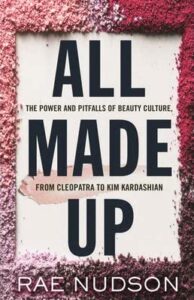
Excerpted from All Made Up: The Power and Pitfalls of Dazzler Civilization from Cleopatra to Kim Kardashian past Rae Nudson (Beacon Press, 2021). Reprinted with permission from Buoy Press.

Source: https://lithub.com/on-makeup-as-a-tool-for-queer-resistance/
Posted by: deeringbefiscure.blogspot.com
0 Response to "How To Avoid Wearing Makeup Like A Lesbian"
Post a Comment